


After the great flood, the world's population was reduced to a mere eight people. No one else survived God's judgment, not even in some remote corner of South America or Australia. Those continents, incidentally, were only formed as a result of the flood. It was a complete rebirth of population: "These are the families of the sons of Noah, according to their generations, with their nations; from them descended the nations who were spread over the earth after the flood" (Genesis 10:32). From these three families emerged the entire world population as we know it today.
The Biblical model clashes with secular theories about a long, drawn-out history of origins spanning hundreds of thousands of years. So the Biblical version cannot be true. Or can it? Based on genetic reconstruction, we can now map the human family tree. Who had contact with whom, and how can we hear the echo of this in our DNA? Dr. Nathaniel Jeanson is conducting groundbreaking research in this field. The results of the study, Traced - Human DNA's big surprise, are extremely intriguing. It will probably turn everything you thought you knew about the development of the world population upside down. Are you up for a challenge?
In the summer of 1799, a remarkable stone was discovered in the Egyptian town of Rosetta. The stone was special because it contained an inscription in both koine Greek and two different early Egyptian languages. It proved to be the key to deciphering ancient hieroglyphic script.
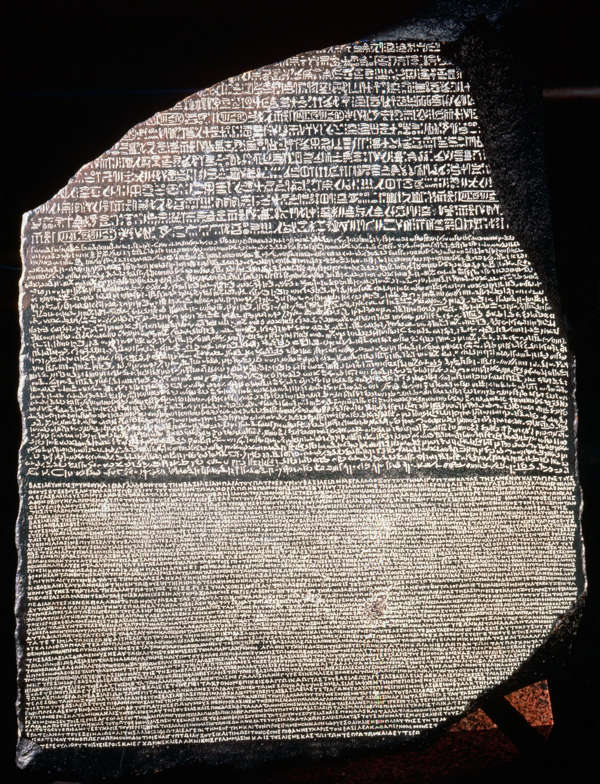
Dr. Jeanson's discovery of Y-chromosome research is a kind of Rosetta Stone. It gives us the key to understanding human history through genes. How does it work?
From generation to generation, people pass on DNA. This is largely a mix of father and mother. Because of this mix, it's difficult to look back more than four or five generations. You lose track. However, there is an element in our DNA, the Y chromosome, that is passed on almost unchanged (through the male line). Almost unchanged, not completely. Small differences do arise because the replication process, since the Fall, has been imperfect. It is this combination of inheritance and minor replication errors that provides the key to understanding human history.
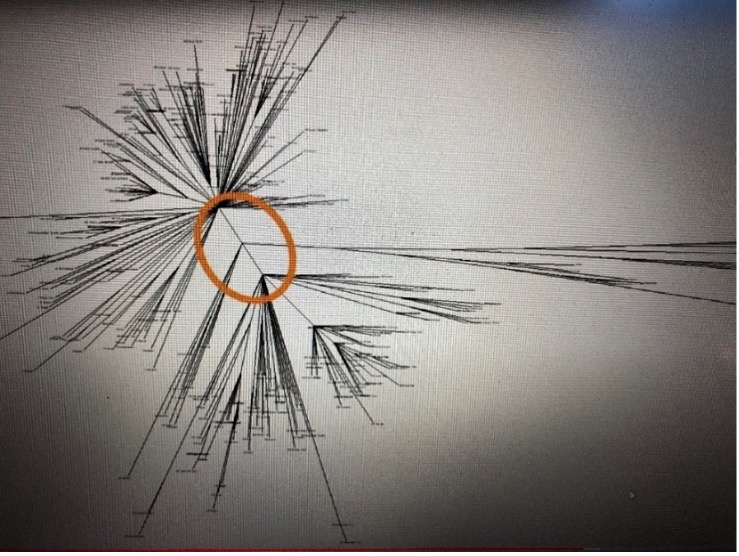
If you look at the genetic patterns of people alive today, you see the differences caused by these copying errors. You can now examine the magnitude of these differences and calculate how far back in time they originated. If I were to compare my own Y chromosome with that of someone else and there were relatively few differences, this would indicate that we shared a common ancestor relatively recently. Conversely, if there were many differences, this suggests that the common ancestor lived further back in time. This, therefore, provides material for constructing reconstructions of the human family tree.
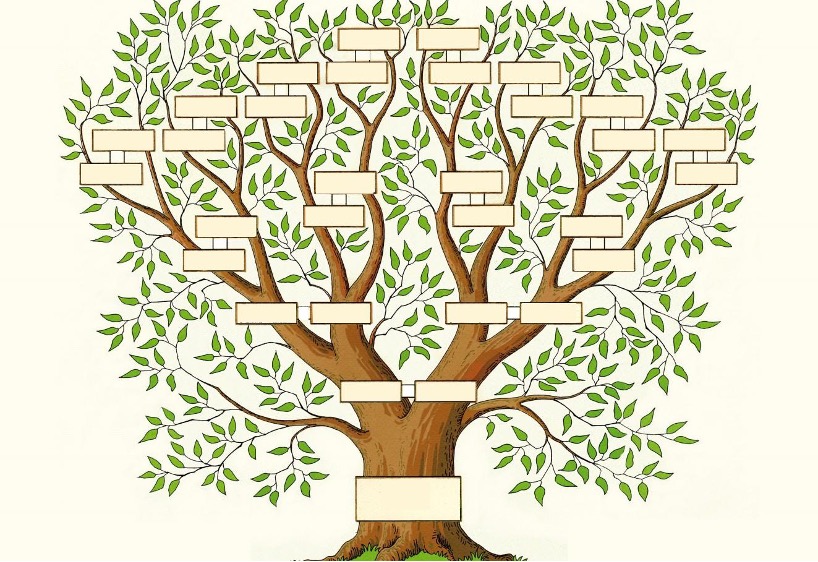
Why doesn't secular science see this? The process of inheritance is, of course, being studied on a larger scale, including by scientists who don't recognize the biblical account as authoritative. They also see that humanity has a common origin and that three distinct families can be found within the global population. Separate terms have even been coined for these (haplogroups).
But two major assumptions are at play that alter the overall picture. First, a time scale of hundreds of thousands or even millions of years is assumed. The "genetic differences" that have arisen must therefore be spread out over a very long period. As a result, the placement of common ancestors in the family tree changes. For example, they would then have lived not 800 years ago, but 12,000 years ago. The second assumption is that the human line must converge with the "ape line" somewhere. In other words, the "genetic difference" between humans and apes must also be bridged. This changes the arrangement of the family tree.
Several genetic studies indicate that the rate at which copying errors arise is much higher than initially thought. In other words, the differences we see today would be "resolved" within a much shorter time based on these findings. The speed of this "genetic clock" points to a history of only a few thousand years. Because this does not fit the evolutionary model, these results have been dismissed. Consider this very remarkable quote from a secular scientist!
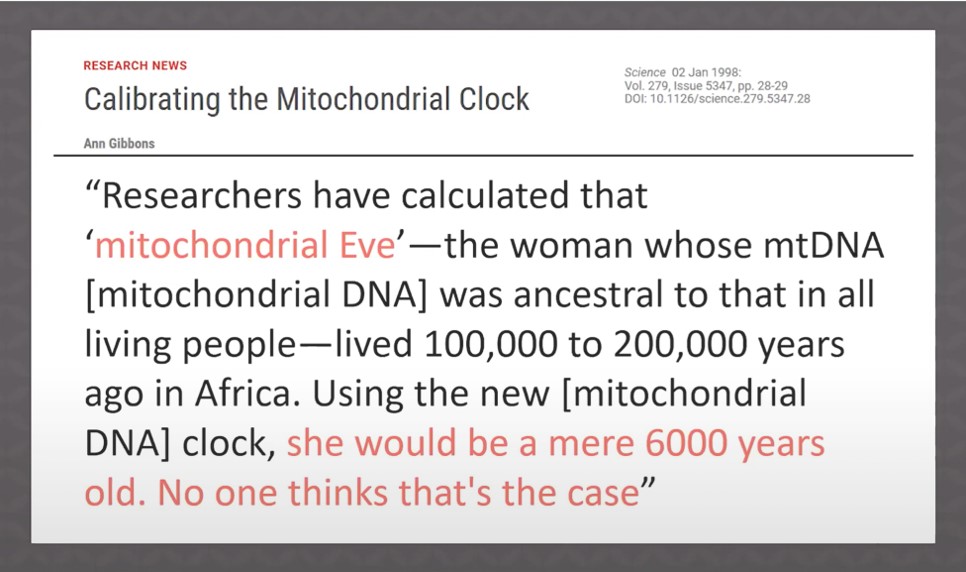
Dr. Jeanson has decided to take the results seriously. What happens if you abandon secular assumptions, follow empirical research, and trust the biblical account?
The results are unprecedented. The genetic family tree, which is based on biblical assumptions, fits perfectly with history as we know it. In this family tree, you hear echoes of actual history at various points. Secular science cannot see all these connections because the family tree in the evolutionary model is stretched out like an accordion. Moreover, the results of this family tree coincide with trends (or declines) in population growth. And now, it's even possible to use a DNA test to determine which of Noah's three sons (Shem, Ham, or Japheth) you descend from! It's a beautiful, robust, and testable model that completely overhauls the conventional view of population history.
The implications of this "Rosetta Stone" are still hard to fathom. For example, indigenous history could be restored to indigenous populations, schoolbooks could be rewritten, there are political implications, it could shed new light on racial conflicts, and it could stimulate profound philosophical reflection on the assumptions of secular science (which also permeate many other disciplines). But even more than that, it creates renewed confidence in the Bible and has the potential to renew theological scholarship. If the Bible can be fully trusted in this regard, then that also strengthens the whole. It's remarkable that God can use even something as imperfect as copying errors to communicate the truth about our world!
This is a more in-depth paper, produced in preparation for the Traced study.
Copyright Answers in Genesis, used by permission.
In the year 2000, the human genome was mapped. A remarkable conclusion was that humanity has a single, common origin. Paul knew this much earlier. Read about it in his speech in Acts 17.
In Genesis 10, you can read about the genealogies after Noah. It might seem boring at first, but upon closer inspection, it's actually incredibly interesting!